
The Information Technology (B.Tech.) program is accredited by the Computing Accreditation Commission of ABET https://www.abet.org, under the commission’s General Criteria and Program Criteria for Information Technology and Similarly Named Computing Programs.
To be a department of repute offering programmes in frontier areas of IT through quality education, research and imbibing societal values.


1. To provide quality education through effective curriculum and
innovative teaching.
2. To facilitate conducive learning environment for students and
faculty to investigate, apply and transfer knowledge.
3. To instill the ethical behavior and social responsibilities to provide
sustainable information technology solutions.
Established in the year 1998, the department of Information Technology is offering B.Tech. programme in Information Technology(IT). The programme B.Tech Information Technology mainly deals with installing, maintaining, improving computer systems, operating networks and databases. In short IT deals with application of computing technology to real life processes by creating technical solutions to business problems. The B.Tech. Information Technology programme approved by AICTE, New Delhi and also by ABET, Accreditation Board for Engineering and Technology, an International accreditation board, USA.
Academics:
The department has fine-tuned syllabus matching the latest industry needs by offering courses like Data Science, Deep Learning, Machine Learning, Artificial Intelligence, Internet of Things and Embedded systems, AWS, Azure web services etc. The department is constantly striving to attain excellence in academics, teaching, innovation, industry-oriented research, and consulting work with service to society.
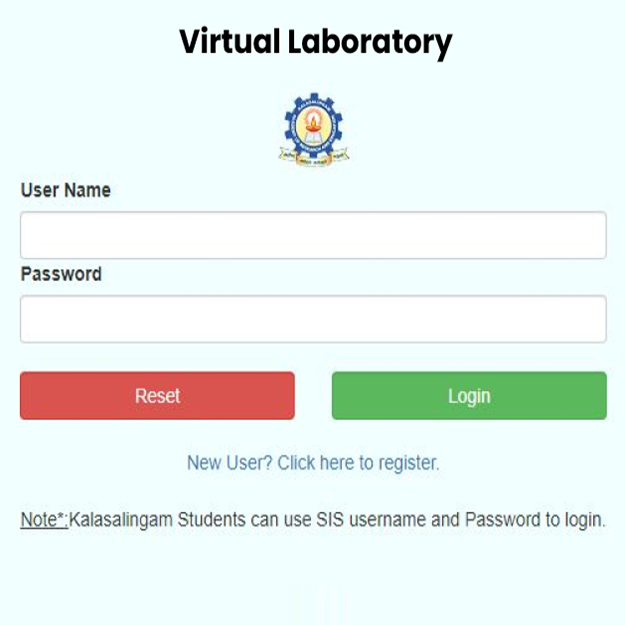
Virtual Laboratory for C/C++/Python
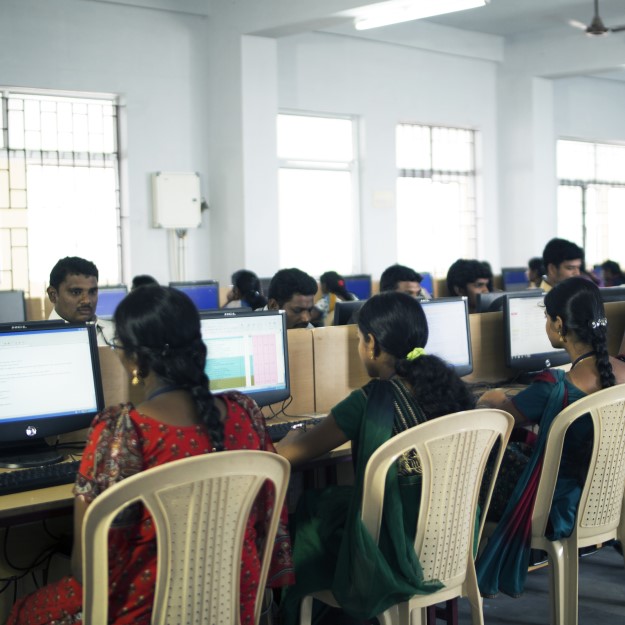
Multimedia & Computer Graphics Laboratory
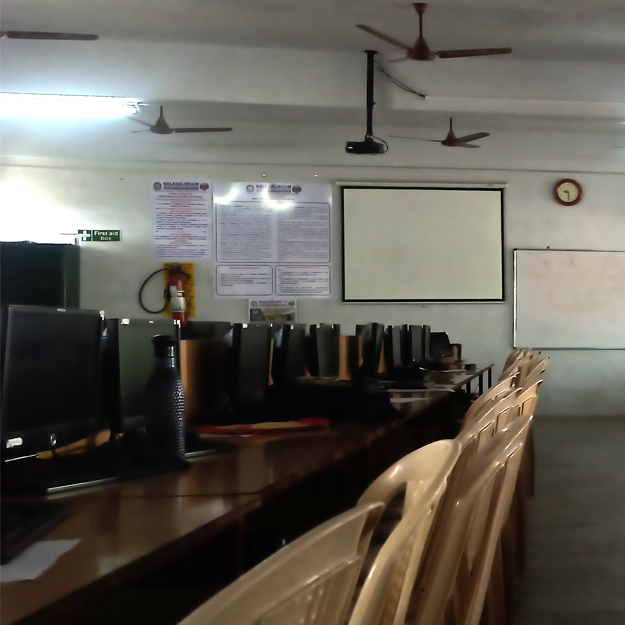
Operating Systems Laboratory
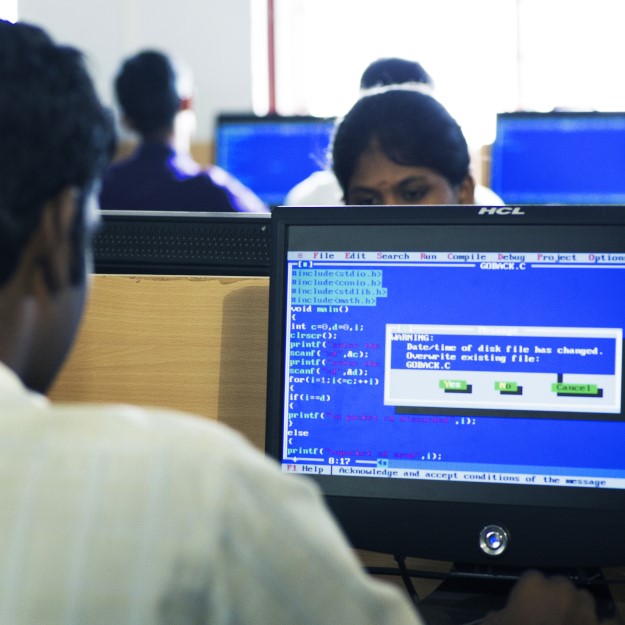
Network Laboratory
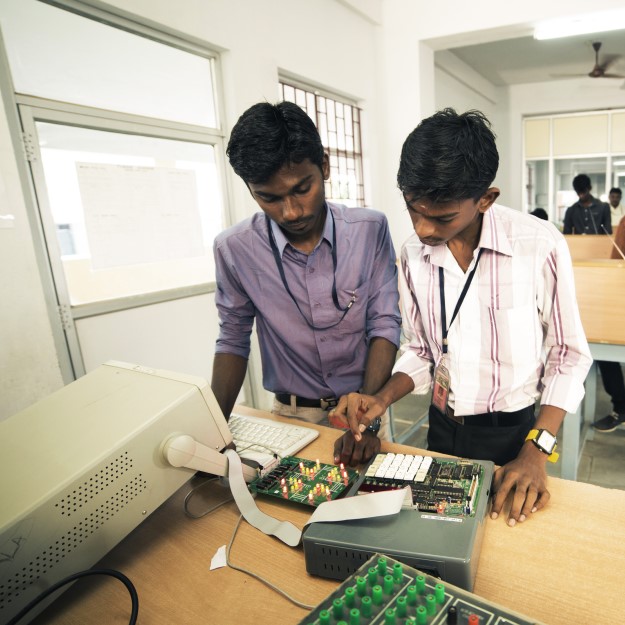
Communication Systems Laboratory
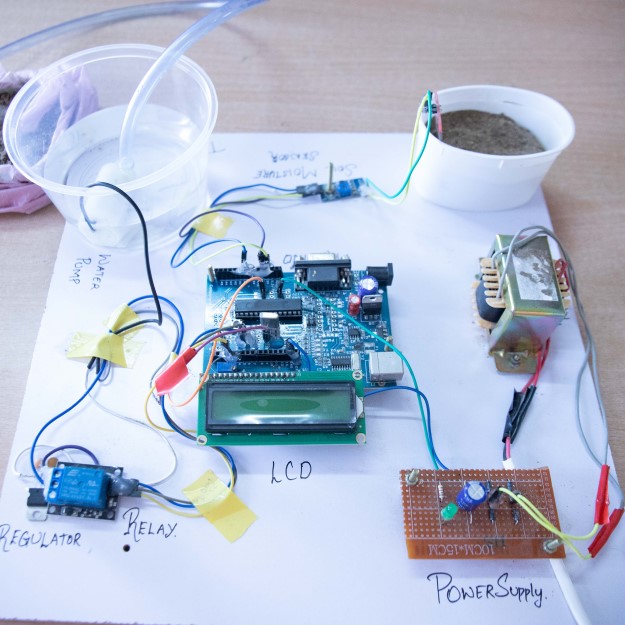
Microprocessors & Microcontrollers Laboratory
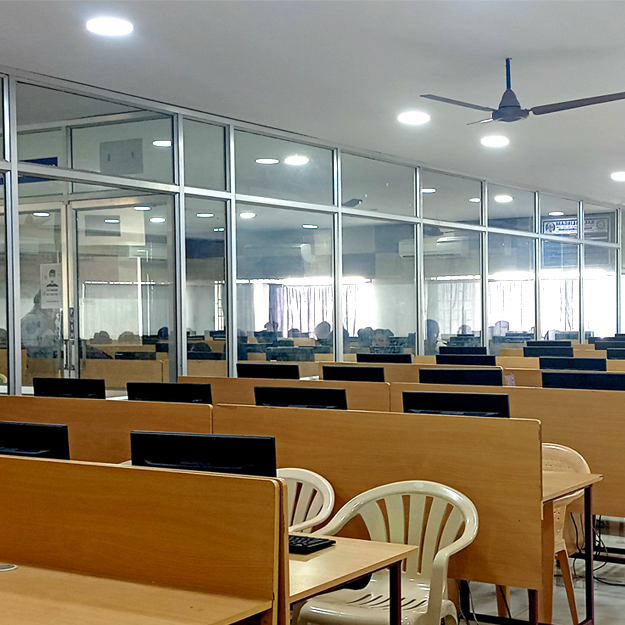
Database Systems Laboratory
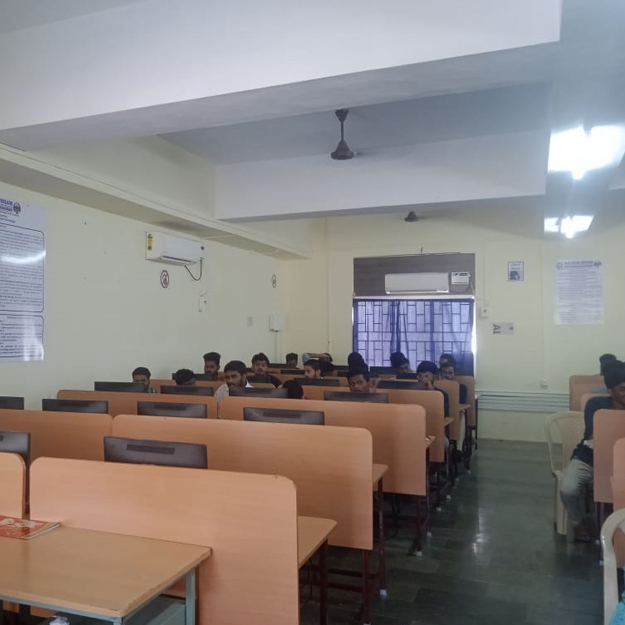
Open Source Technology Laboratory
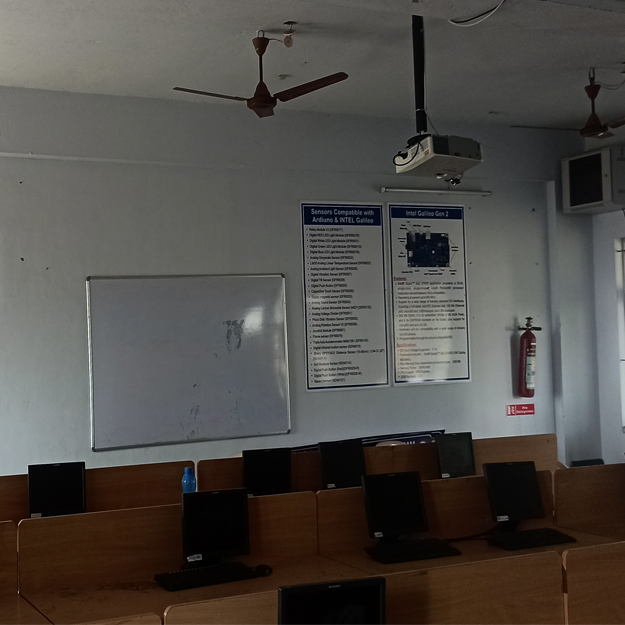
Capstone Design Laboratory
Program Outcomes (POs)
PO1: Engineering Knowledge: Apply knowledge of mathematics, natural science, computing, engineering fundamentals and an engineering specialization as specified in WK1 to WK4 respectively to develop to the solution of complex engineering problems.
PO2: Problem Analysis: Identify, formulate, review research literature and analyze complex engineering problems reaching substantiated conclusions with consideration for sustainable development. (WK1 to WK4)
PO3: Design/Development of Solutions: Design creative solutions for complex engineering problems and design/develop systems/components/processes to meet identified needs with consideration for the public health and safety, whole-life cost, net zero carbon, culture, society and environment as required. (WK5)
PO4: Conduct Investigations of Complex Problems: Conduct investigations of complex engineering problems using research-based knowledge including design of experiments, modelling, analysis & interpretation of data to provide valid conclusions. (WK8).
PO5: Engineering Tool Usage: Create, select and apply appropriate techniques, resources and modern engineering & IT tools, including prediction and modelling recognizing their limitations to solve complex engineering problems. (WK2 and WK6)
PO6: The Engineer and The World: Analyze and evaluate societal and environmental aspects while solving complex engineering problems for its impact on sustainability with reference to economy, health, safety, legal framework, culture and environment. (WK1, WK5, and WK7).
PO7: Ethics: Apply ethical principles and commit to professional ethics, human values, diversity and inclusion; adhere to national & international laws. (WK9)
PO8: Individual and Collaborative Team work: Function effectively as an individual, and as a member or leader in diverse/multi-disciplinary teams.
PO9: Communication: Communicate effectively and inclusively within the engineering community and society at large, such as being able to comprehend and write effective reports and design documentation, make effective presentations considering cultural, language, and learning differences
PO10: Project Management and Finance: Apply knowledge and understanding of engineering management principles and economic decision-making and apply these to one’s own work, as a member and leader in a team, and to manage projects and in multidisciplinary environments.
PO11: Life-Long Learning: Recognize the need for, and have the preparation and ability for i) independent and life-long learning ii) adaptability to new and emerging technologies and iii) critical thinking in the broadest context of technological change. (WK8)
INFORMATION TECHNOLOGY (PEOs)
Within few years after graduation, our graduates will:
PEO-1. Build successful careers or undertake higher studies and research in IT-related fields.
PEO-2. Develop innovative products and implement novel solutions to real-world problems in IT and related interdisciplinary areas.
PEO-3. Understand the societal impact of IT services and apply their skills in an ethical, responsible and professional manner.
INFORMATION TECHNOLOGY (PSOs)
Program Specific Outcomes (PSOs):
PSO1: Professional Skills: Graduates will be able to design, develop, and implement effective IT solutions to meet business and organizational needs.
PSO2: Infrastructure Management: Graduates will be capable of deploying, managing, and securing IT infrastructure to support efficient and scalable operations.
PSO3: Ethics and Societal Impact: Graduates will apply ethical, sustainable, and responsible IT practices to address societal and environmental challenges.
SO1: Analyze a complex computing problem and apply principles of computing and other relevant disciplines to identify solutions.
SO2: Design, implement, and evaluate a computing-based solution to meet a given set of computing requirements in the context of the program’s discipline.
SO3: Communicate effectively in a variety of professional contexts.
SO4: Recognize professional responsibilities and make informed judgments in computing practice based on legal and ethical principles.
SO5: Function effectively as a member or leader of a team engaged in activities appropriate to the program’s discipline.
SO6: Use systemic approaches to select, develop, apply, integrate, and administer secure computing
technologies to accomplish user goals.










Ms. T. MyvizhiPriya secured 3rd in the State level Inter College Volleyball Tournament Conducted by Saveetha University.
Ms. T. MyvizhiPriya secured 2nd in the 18th Youth National Volleyball Championship held at Nagpur.
Mr. Aravinth Kanna S and Ajith Madhan K won Software Challenge of the 24 Hour Design thinking Hackathon I3-Hack during 2020 conducted by SNS College of Engineering
Mr. N T Haribabu secured 1st place in the Quiz-O-Holic organized as a part of technical fest CRYPTERA’18, Coimbatore Institute of Technology.
Mr. P. Mahavishnu has been placed Taluk Level First in the Essay Competition held on the National Voters Day in Virudhunagar District.
–>
InfoBytes is a Tech club of Department of Information Technology with a community of students highly enthusiastic about coding, ethical hacking, Web Designing and all other aspects of programming. We organize activities related to Development (Web Development, Open Source, Game/App Development), programming contests, hackathons. Lecture series and Webnier are regularly taken on algorithms, web hijacking, development, among other things.
Activities:
Organizes activities related to Development (Web Development, Open Source, Game/App Development), programming contests, hackathons. Lecture series and Webinar are regularly taken on algorithms, web hijacking, development, among other things.
Link for InfoBytes: INFOBYTES LINK
As a student of Kalasalingam University, I gained both the skills and confidence to thoughtfully use a variety of quantitative approaches in my work. It was my immense luck and fortune to be part of Kalasalingam University. The mentors at Kalasalingam University are very helpful and helped me to improve my academic and interpersonal skills. I really like the placement process of our university. Everyone is working really hard for all students so that they could get easily placed in best companies. My four years at Kalasalingam University have been beautiful and a memory to cherish for a lifetime.
Myvizhipriya Thangaraj, 2013 – 2017, Senior Analyst, Capgemini.
CHRISPA DANIEL (2016-20), Legato Health Technologies LLP