Advancing Sustainability Through Education, Research, Innovation, and Community Engagement
Kalasalingam Academy of Research and Education (KARE) is committed to advancing the United Nations Sustainable Development Goals (SDGs) through a holistic approach that integrates sustainability into teaching, research, innovation, campus operations, and community outreach. As a globally engaged institution, KARE recognizes its responsibility in addressing contemporary societal and environmental challenges while contributing to sustainable development at local, national, and international levels
The University actively aligns its academic programs, research initiatives, extension activities, and institutional policies with the 17 Sustainable Development Goals adopted by the United Nations. Through interdisciplinary collaboration, industry partnerships, technology-driven solutions, and community engagement programs, KARE strives to create a positive and measurable impact on society.
Sustainability is embedded across the University’s ecosystem through initiatives focused on quality education, healthcare, gender equality, clean energy, water conservation, responsible consumption, climate action, biodiversity conservation, sustainable infrastructure, innovation, entrepreneurship, and inclusive community development. The University continuously promotes awareness and participation among students, faculty, researchers, and stakeholders to foster a culture of sustainability and social responsibility.
KARE’s commitment to the SDGs is reflected through:
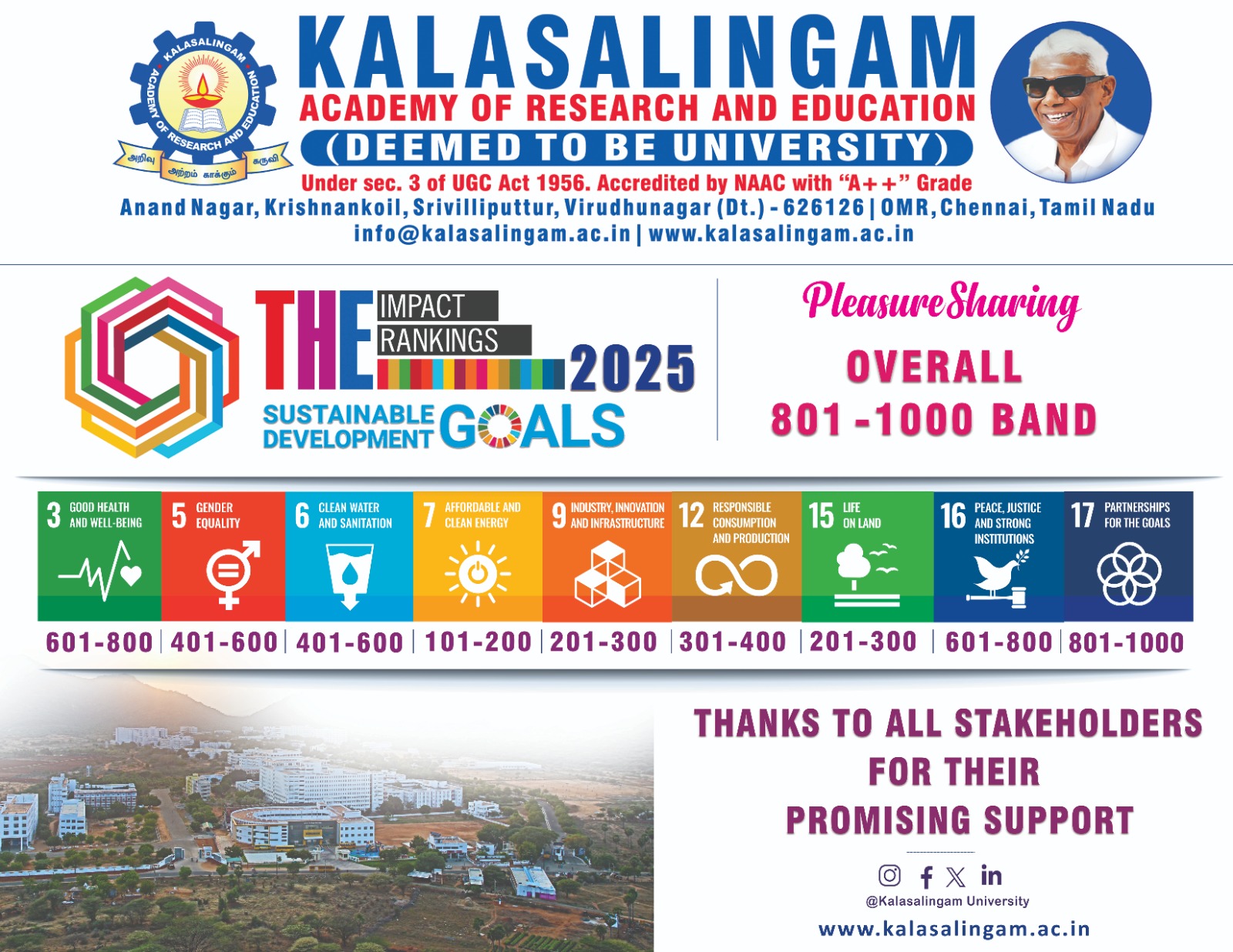
Through these efforts, KARE contributes to the achievement of the Sustainable Development Goals while nurturing future leaders, innovators, and change-makers who are committed to building a more sustainable, equitable, and resilient world. The University’s initiatives support multiple SDGs, including Quality Education (SDG 4), Good Health and Well-being (SDG 3), Clean Water and Sanitation (SDG 6), Affordable and Clean Energy (SDG 7), Decent Work and Economic Growth (SDG 8), Industry, Innovation and Infrastructure (SDG 9), Sustainable Cities and Communities (SDG 11), Responsible Consumption and Production (SDG 12), Climate Action (SDG 13), Life on Land (SDG 15), and Partnerships for the Goals (SDG 17).
Vision for Sustainable Development
To be a globally recognized institution that advances sustainable development through excellence in education, research, innovation, and societal engagement, thereby contributing to the achievement of the United Nations Sustainable Development Goals.
Mission
KARE and the 17 Sustainable Development Goals
At KARE, every academic school, department, research center, and administrative unit contributes to one or more of the 17 Sustainable Development Goals. Through a combination of education, research, innovation, policy implementation, and community outreach, the University remains committed to creating sustainable solutions that benefit present and future generations.
Institutional Approach Towards Sustainability
At KARE, sustainability is not viewed as a standalone initiative but as a guiding principle that shapes institutional policies, academic programs, research priorities, infrastructure development, and community engagement activities. The University adopts a multidisciplinary and participatory approach to sustainability by encouraging collaboration among faculty, students, researchers, industry partners, government agencies, and local communities.
Through strategic planning and continuous improvement, KARE strives to create a sustainable campus ecosystem that promotes environmental stewardship, social responsibility, and economic resilience. Sustainability considerations are integrated into decision-making processes, ensuring that development activities align with long-term environmental and societal goals.
Education for Sustainable Development
KARE actively promotes Education for Sustainable Development (ESD) by incorporating sustainability-related concepts into academic curricula across engineering, science, management, agriculture, health sciences, humanities, and emerging interdisciplinary fields. Students are encouraged to understand global sustainability challenges and develop innovative solutions through project-based learning, experiential education, internships, field visits, and community-oriented activities.
The University regularly organizes:
These activities empower students to become responsible global citizens capable of contributing meaningfully to sustainable development.
Research and Innovation for Sustainable Development
Research at KARE is driven by the vision of addressing real-world challenges through innovation and technological advancement. The University supports interdisciplinary research that contributes to multiple Sustainable Development Goals through dedicated research centers, laboratories, incubation facilities, and industry collaborations.
Key research areas include:
Faculty members and researchers actively publish high-impact research and collaborate with national and international organizations to generate sustainable solutions with societal impact.
Sustainable Campus Initiatives
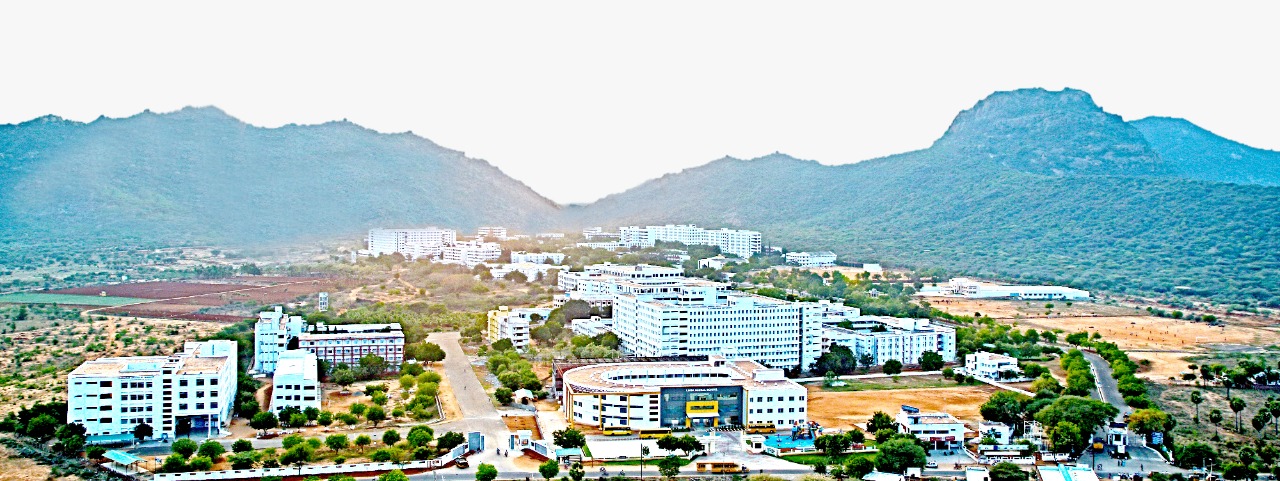
KARE has developed a green and environmentally responsible campus through the implementation of various sustainability initiatives that enhance resource efficiency and environmental conservation.
Major initiatives include:
Energy Management
Water Conservation
Waste Management
Biodiversity Conservation
Sustainable Transportation
These efforts contribute significantly to reducing the University’s environmental footprint and advancing sustainable campus operations.
Community Engagement and Social Responsibility
KARE believes that universities play a vital role in driving sustainable development beyond campus boundaries. Through various outreach programs, the University actively engages with rural and urban communities to address social, economic, and environmental challenges.
Community-focused initiatives include:
These initiatives contribute to inclusive development and support the University’s commitment to societal transformation.
Partnerships for Sustainable Development
Recognizing that sustainable development requires collective action, KARE actively collaborates with:
These partnerships facilitate knowledge exchange, collaborative research, technology transfer, capacity building, and implementation of sustainable development initiatives aligned with SDG 17 – Partnerships for the Goals.
Measuring Impact and Continuous Improvement
KARE continuously monitors and evaluates its sustainability performance through measurable indicators and globally recognized frameworks. The University participates in various sustainability rankings and reporting initiatives to benchmark progress and identify opportunities for improvement.
Through data-driven assessment and stakeholder engagement, KARE remains committed to enhancing its contribution toward the achievement of the Sustainable Development Goals and creating a sustainable future for generations to come.
Global Sustainability Rankings and Recognition
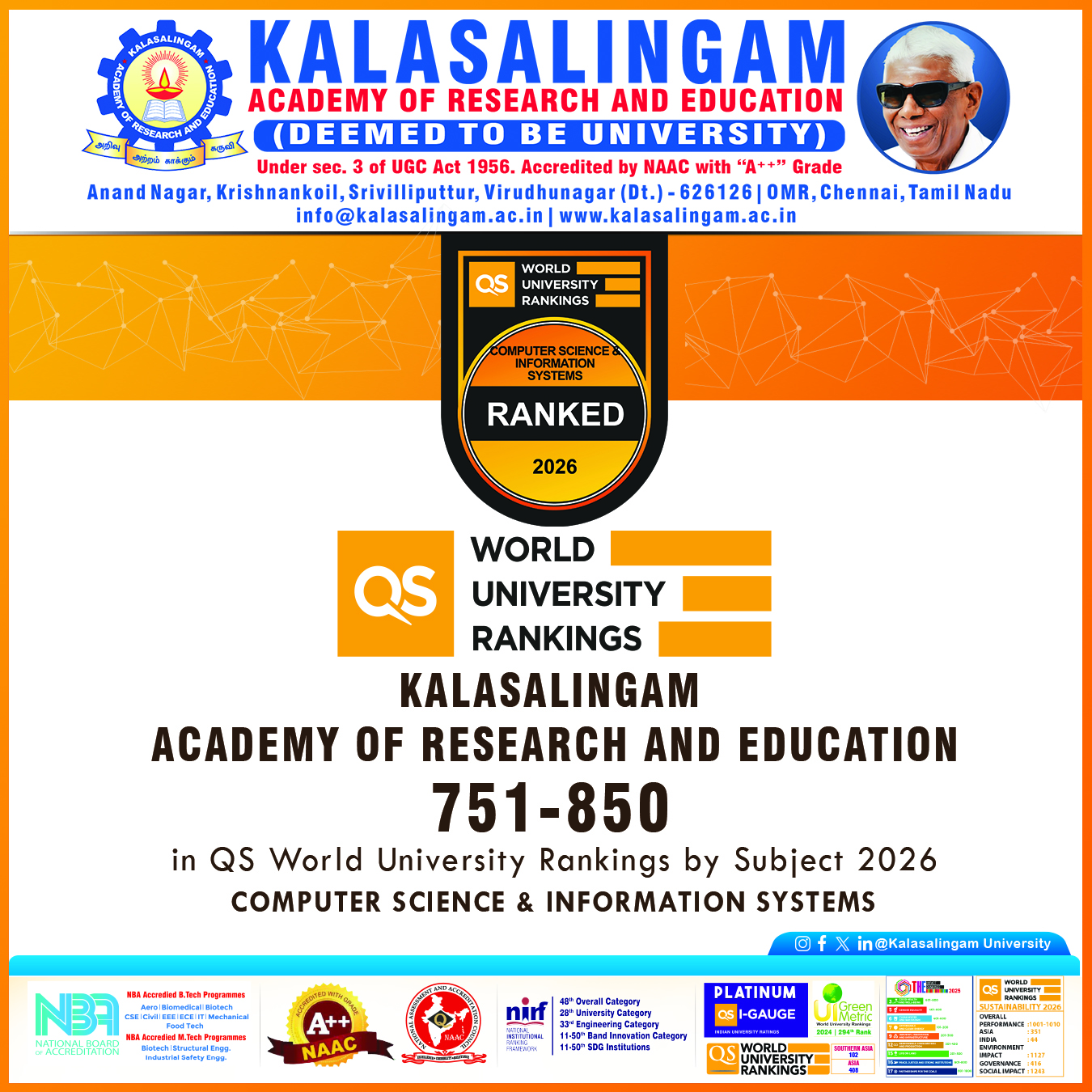
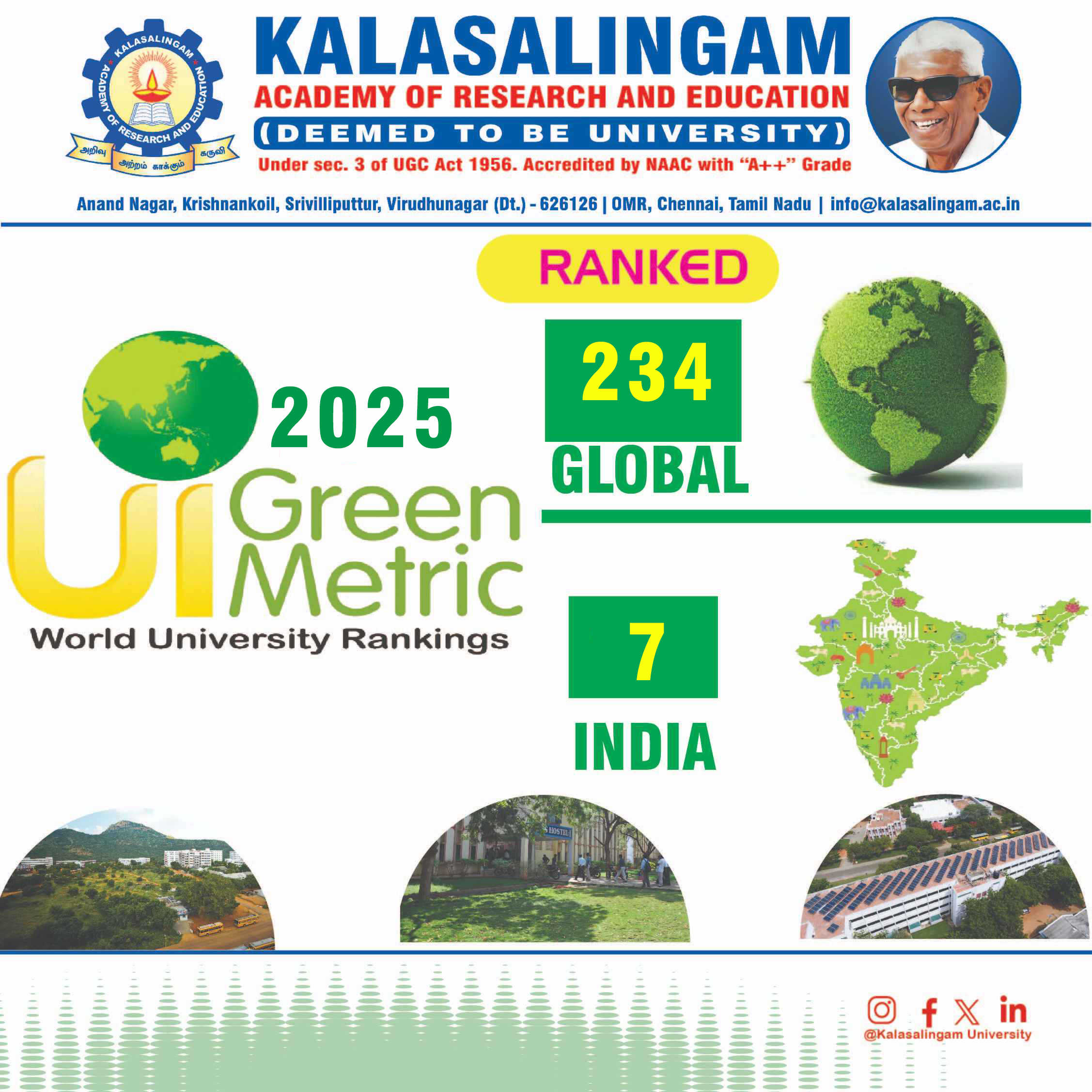
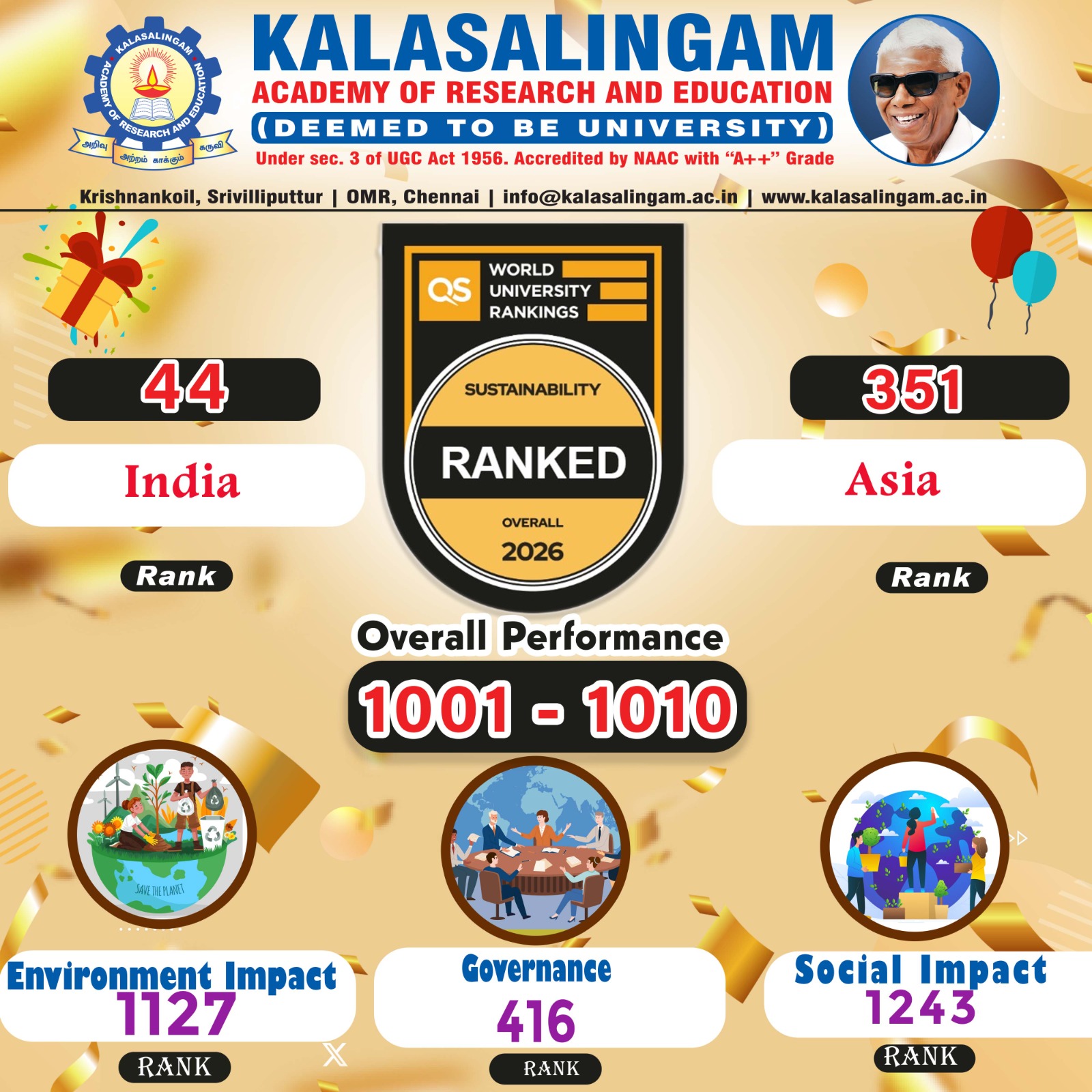
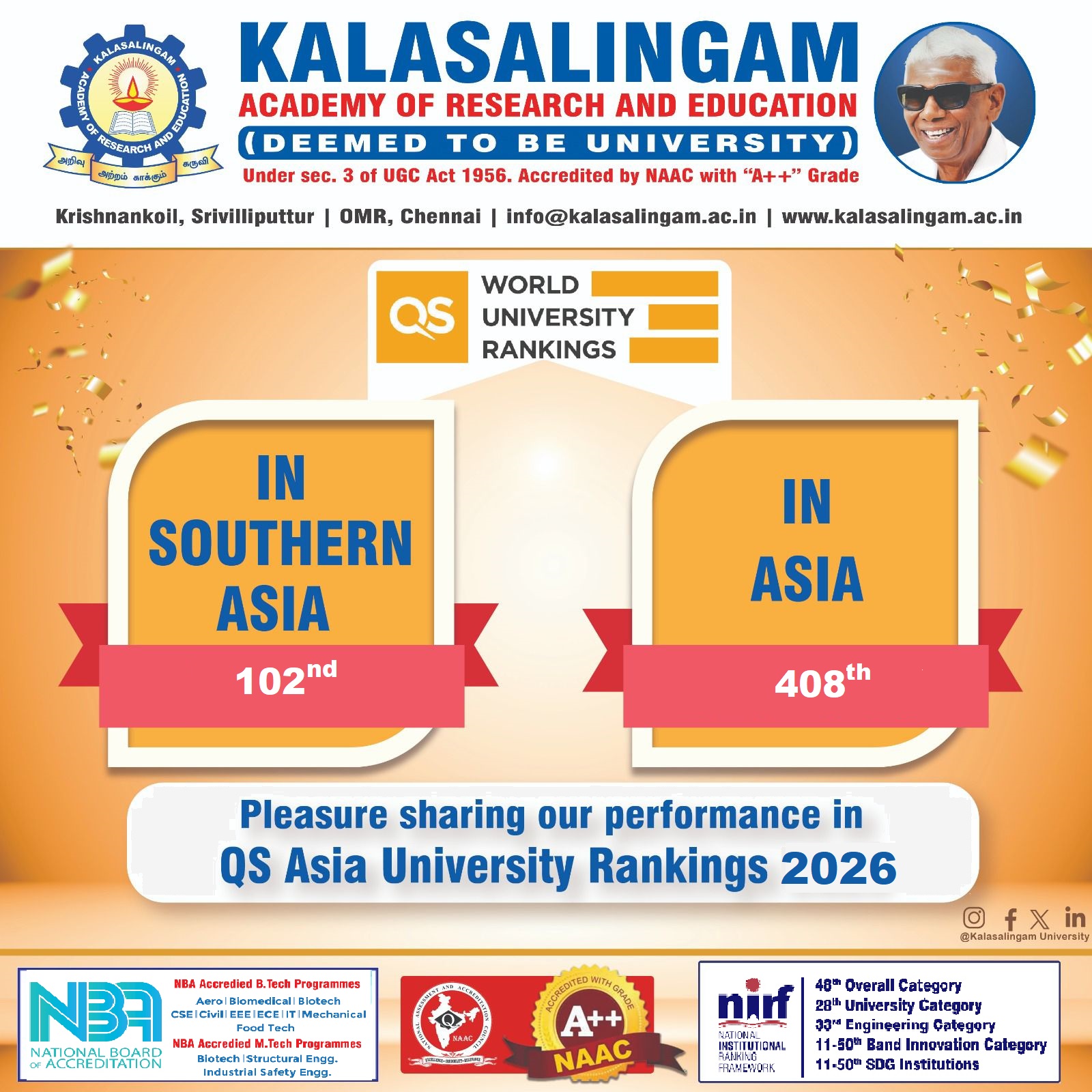
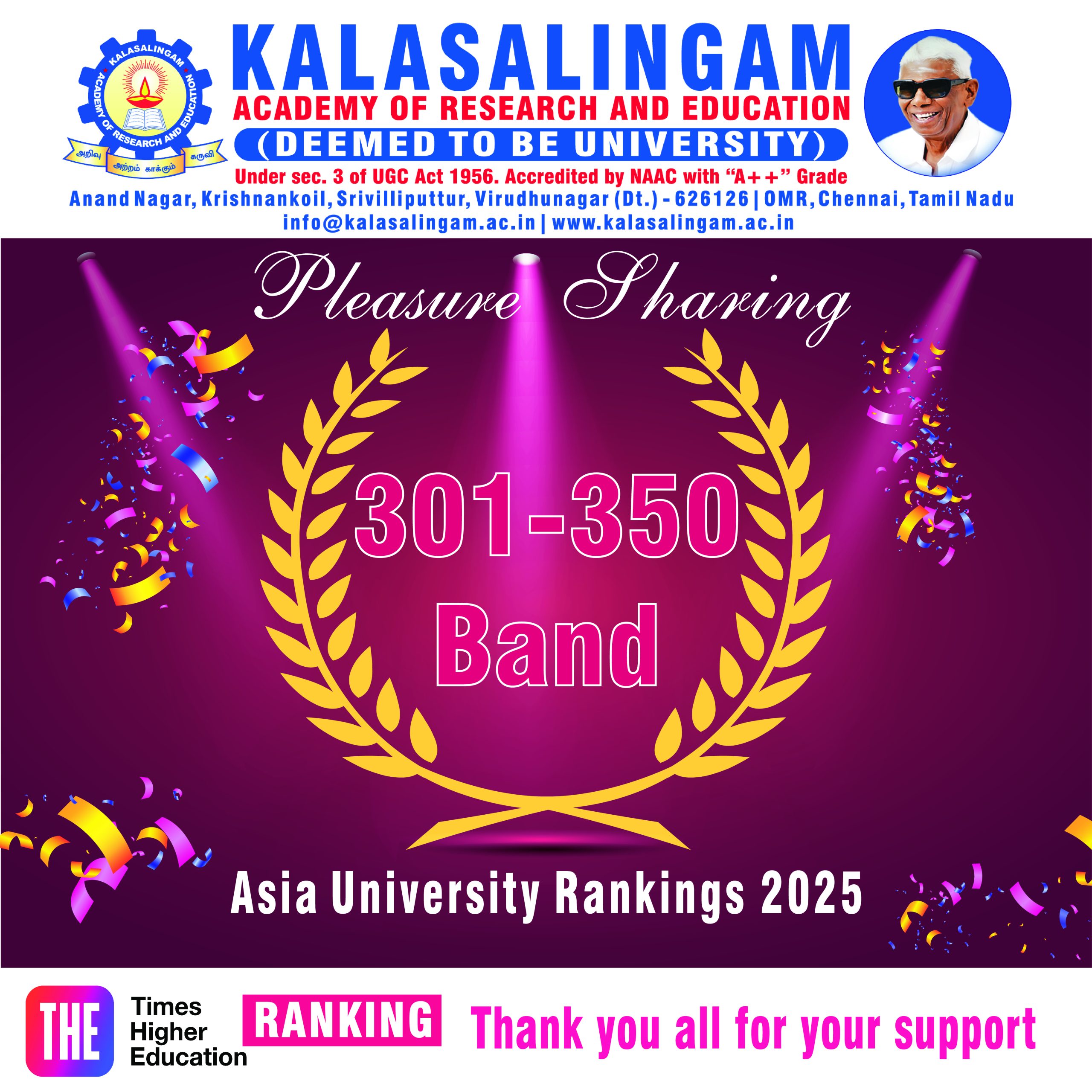
Kalasalingam Academy of Research and Education (KARE) actively participates in nationally and internationally recognized sustainability assessment frameworks to evaluate its progress toward sustainable development and benchmark its performance against leading institutions worldwide.
These rankings provide an opportunity to assess the effectiveness of the University’s sustainability initiatives, identify areas for improvement, and strengthen its contribution to the United Nations Sustainable Development Goals (SDGs).
The University regularly submits data and evidence to various sustainability ranking and reporting platforms, including:
Through its participation in these rankings, KARE demonstrates transparency, accountability, and continuous commitment to sustainable development. The University’s achievements in sustainability rankings reflect its efforts in education, research, environmental stewardship, social impact, governance, innovation, and community engagement.
The ranking outcomes serve as valuable indicators of KARE’s progress in advancing the Sustainable Development Goals and reinforce its position as a socially responsible and environmentally conscious higher education institution. The University continuously strives to improve its performance through evidence-based planning, stakeholder participation, and implementation of best sustainability practices.
Sustainability Reporting and Performance Monitoring
To ensure transparency and continuous improvement, KARE periodically publishes sustainability-related reports and performance indicators that showcase its contributions toward the SDGs. These reports highlight achievements in areas such as:
The University remains committed to strengthening its sustainability performance and enhancing its global standing through strategic initiatives aligned with the United Nations 2030 Agenda for Sustainable Development.
Our Commitment to the Future
Kalasalingam Academy of Research and Education reaffirms its commitment to advancing the United Nations Sustainable Development Goals through excellence in education, impactful research, responsible campus management, and meaningful community engagement. By fostering innovation, inclusivity, and environmental stewardship, KARE seeks to create lasting positive change and contribute to a more sustainable, equitable, and prosperous world.